Automation of reports from evaluation data
- Status
- Finished
- Project Period
- July 2025 – February 2026
- Partner
Challenge
The central challenge for coach@school was the previously manual process of analyzing and reporting on data collected through their programs. This included reading journals, annual surveys with teachers, and feedback on training sessions. Data was collected via SurveyMonkey and downloaded as CSV files. Each year, approximately 250 teacher responses and around 6,000 reading journal entries were collected — analysis and visualization were done entirely by hand in Excel, while reports were compiled in Word.
This manual process proved time-consuming and error-prone: producing a single report tied up significant staff resources and noticeably delayed feedback to funders and stakeholders. Creating reports with different regional focuses was particularly burdensome, as data from multiple sources had to be merged manually, analyses rebuilt from scratch each time, and charts recreated anew with every iteration.
The Project
The goal of the project was to automate the existing, heavily manual processes and deliver results in the form of a sustainable reporting system. This system was intended for long-term, independent use by coach@school staff, enabling them to communicate with funders and partners more quickly, in a data-driven and audience-appropriate way, while also relieving pressure on internal resources.
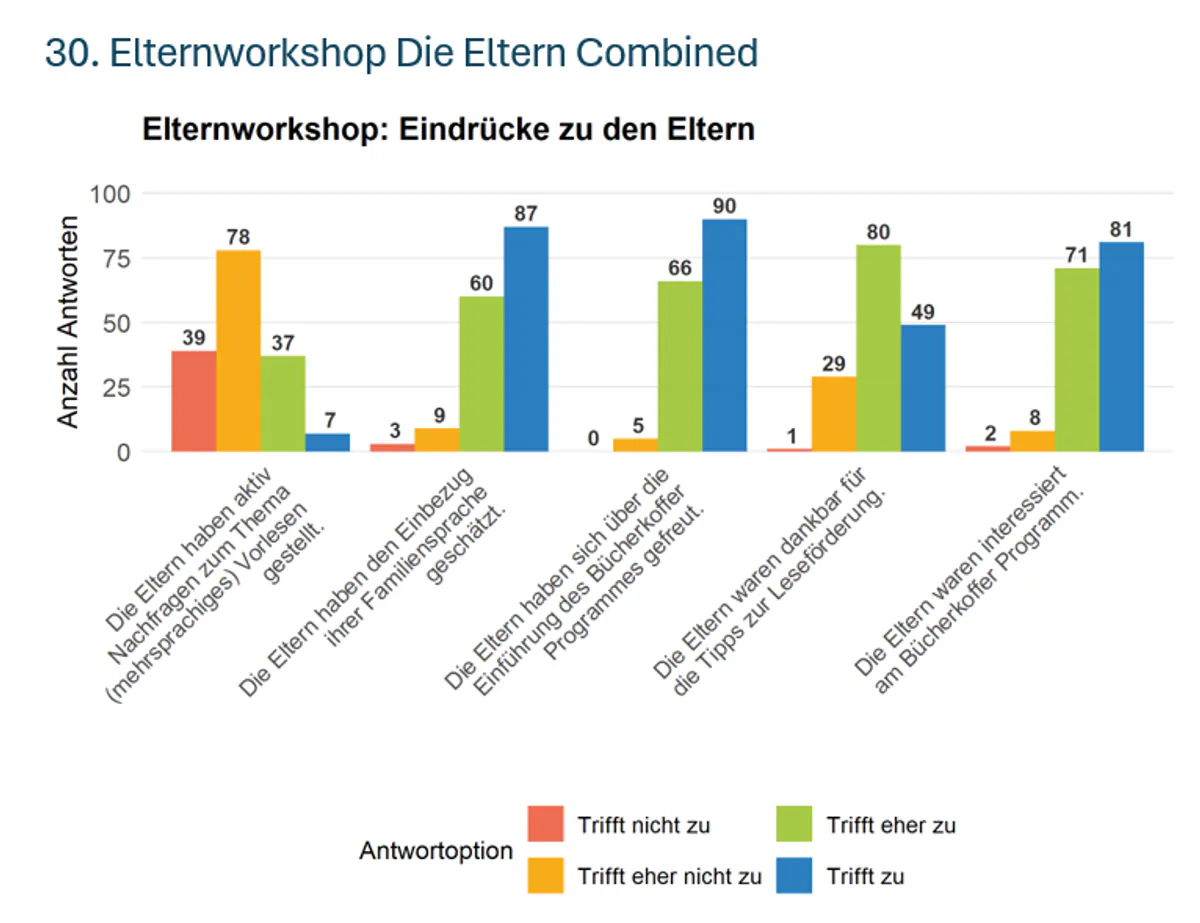
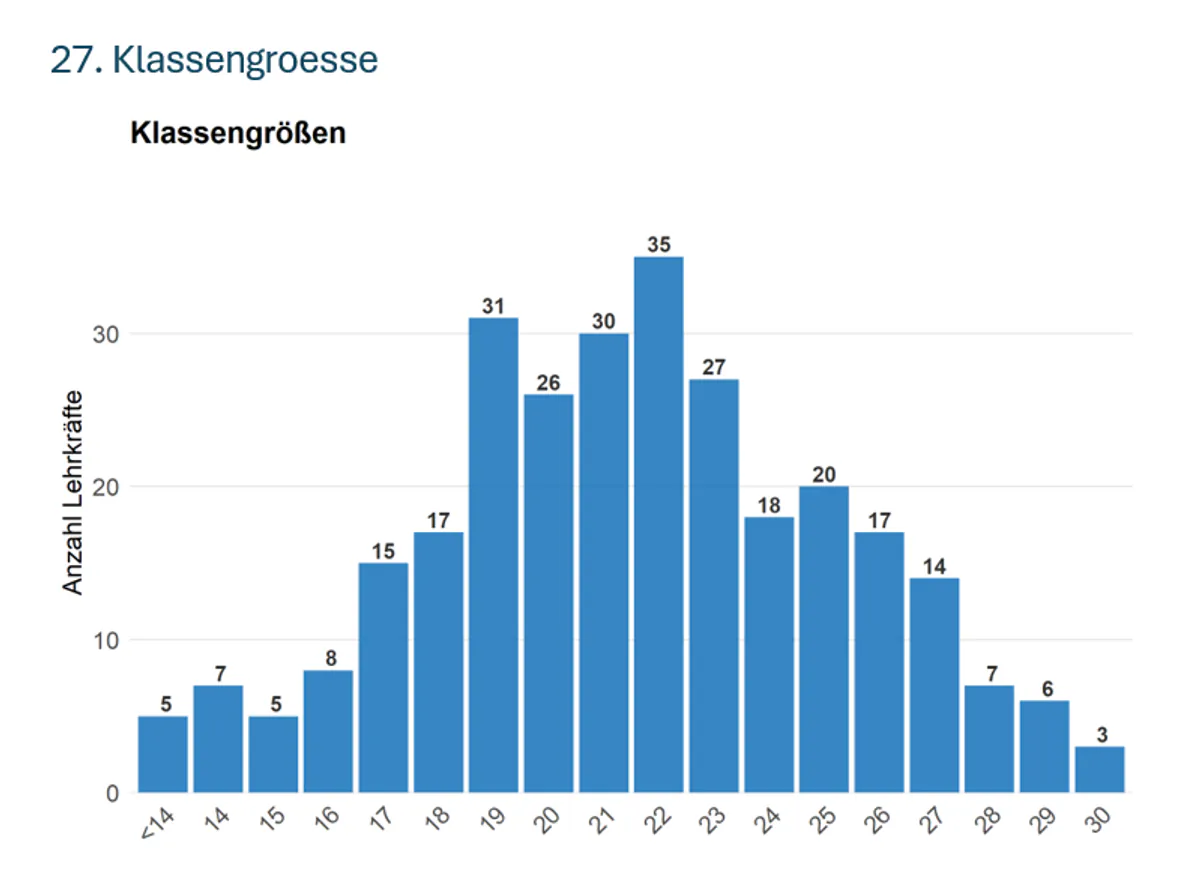
Two types of datasets were analyzed in the project: teacher surveys providing feedback on the Bücherkoffer ("book suitcase") program, and analyses of students' reading journals covering topics such as book popularity and how frequently the Bücherkoffer were used. The data came from SurveyMonkey surveys and was provided as CSV files.
The core project activities included:
- Cleaning the exported CSV files in line with the tidy data approach (data is "tidy" when each variable has its own column, each observation its own row, and each value its own cell)
- Creating a standardized report at the national level and a second report with a regional focus (e.g. at the federal state level), to serve as a template for further reports
- Automating the reporting process using RMarkdown and/or Quarto
- Comprehensive documentation and training for the coach@school team, enabling them to adapt and reuse the reports independently
- Visual redesign and partial expansion of the data visualizations
An optional accompanying tutoring offer was also provided to give staff a foundational understanding of R and ease the transition to independent work after project completion.
Impact
The output of the project was an automated reporting system that summarizes the evaluation results of the Bücherkoffer program, presents them in a visually compelling way, and can be generated flexibly for different regions. Outputs included Word documents organizing visualizations by survey chapter, as well as the option to open a Shiny-based Quarto document enabling interactive exploration of questions and charts, with the ability to download individual visualizations. The system allows coach@school to inform funders about their work in a targeted and compelling way.
Beyond the technical output, the comprehensive documentation and training empowered coach@school staff to run the reports independently and apply them to future surveys.
The project results directly contribute to making recurring workflows more efficient and freeing up internal resources - allowing the organization to focus more on its work with children and young people. At the same time, the improved analyses enable a deeper understanding of the programs' impact and the needs of their target groups.
CorrelAid Team
- Torben Stein
